


Artist's Reception ~ Michael Marino Exhibit
Time & Location
Oct 17, 2025, 4:00 PM – 6:00 PM
Grand Mesa Arts & Events Center, 195 W Main St, Cedaredge, CO 81413, USA
Details
Celestial Beauty in the Night Sky
The Allure of Nebulae
Photographer: Michael Marino
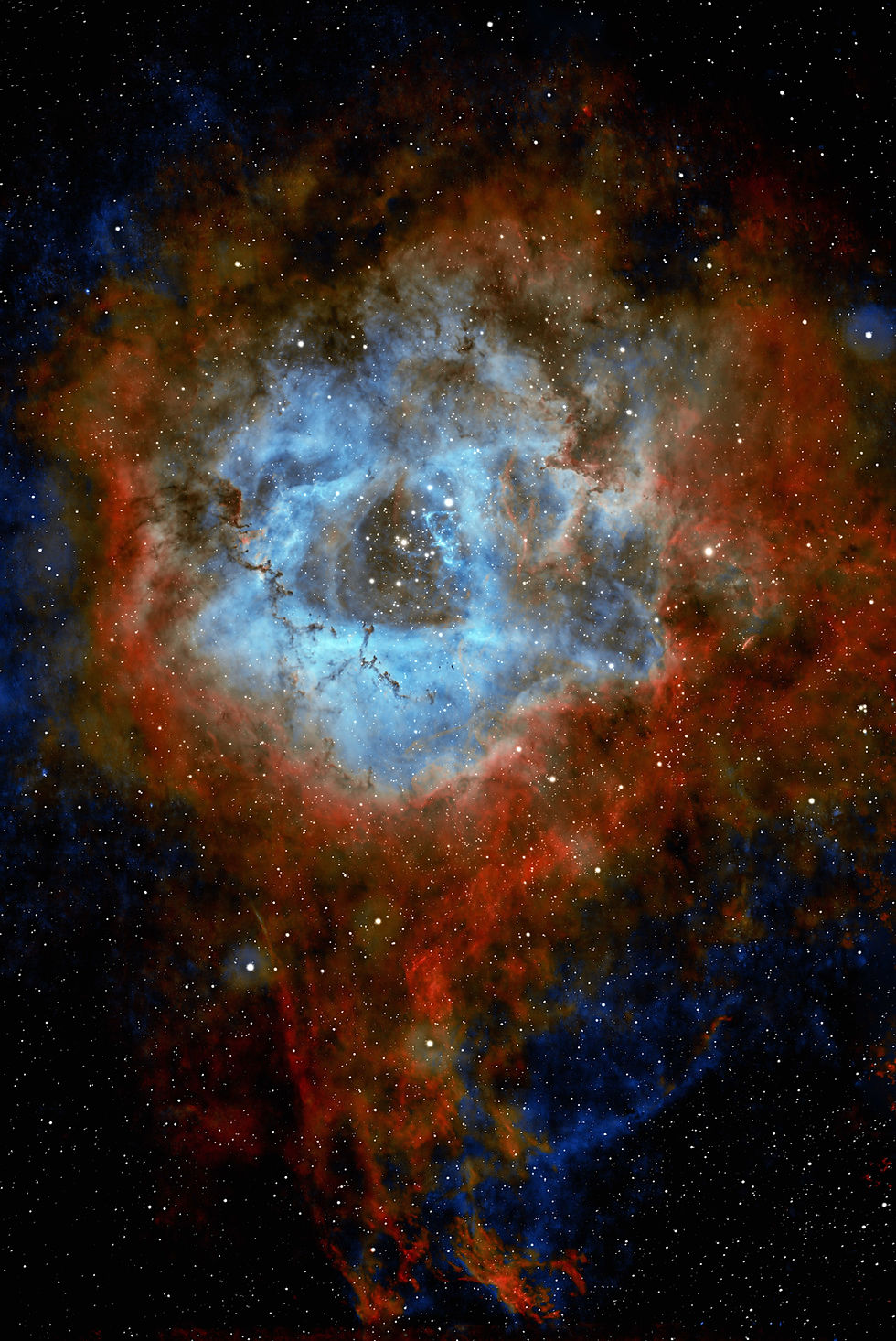
An astrophotography exhibit of twenty named and catalogued objects or “targets” in our night sky.
Each target has a unique and alluring combination of gases, dust, light, and color (nebulosity) that make it a celestial work of art.
About Michael Marino
Prior to relocating to the western slope in 2008, I enjoyed a career in Information Technology based mostly out of the Denver metro area. A few years after my relocation, I took a part time position working at the bookstore at the Black Canyon of the Gunnison National Park. I believe that my exposure and participation in the Park’s astronomy programs, under the dark skies of the western slope, was the spark that ignited my interest in photographing the cosmos.
My initial interest was in nightscape photography where I would pair an interesting western landscape in the foreground with a night sky background, usually including the Milky Way core. A wide-angle lens, a DSLR camera, a steady tripod, and the desire to enjoy the night sky were all you needed to get started in this type of astrophotography. It is a hobby where insomnia can be a good thing.
Nightscape photography gave me a reason to explore the landscapes of most of the western states and many of the western national parks. As my skills increased, so did the complexity of the hobby. The techniques, equipment, and software evolved to include multiple cameras, several more lenses, and a very specialized panoramic camera mount designed to capture multiple row panoramas of the sky.
As I became more comfortable with my nightscape photography skills, good results were easier to reach, but the comfort brought less stimulation. To add new challenges to my astrophotography hobby, I needed to expand my subject matter and equipment. I started watching videos created by people who had built their own home observatory. Armed with enough information to be dangerous, in late 2019, I started construction on my own roll off roof backyard observatory.
I limited the size of the structure to 10’ x 12’ which meant that in my location, a building permit was not required. It took me about six months to build the basic structure and select, source, and install the new observatory equipment. At this point, I had to start learning how to use the equipment. Suffice it to say that there is a very large learning curve for anyone just starting out in this hobby. I now had all the challenges and stimulation that I could handle.
I was stubbornly intent on being a self-taught astrophotographer. I learned nightscape photography without formal instruction, so I elected to use YouTube videos and trial and error discovery to learn deep sky astrophotography. Once I had a functioning observatory, it took me another 18 months to make improvements to the observatory, while learning its equipment, software, and post processing techniques. By then, I had established a workflow that could complete an usable image.
Two 80 mm aperture refractors, shooting the night sky at a focal length of 385 mm, were combined with cooled astronomy cameras, narrowband filters, and an equatorial mount, to capture the exposure data for these images. Most of the images in the display have over 30 hours of exposure time, some of them have data acquired in 2022. Each year that I acquire new data for a target, it is combined with the older data and then reprocessed into a new image. The prints in the exhibit are my latest versions of each target.
The color mapped prints in this exhibit are actually composite images. Most are created from three monochromatic images, captured through Sulfur (Sii), Hydrogen (Ha), and Oxygen (Oiii) narrowband filters. The Sii, Ha and Oiii images are assigned to the red, green, and blue channels (SHO) in post processing to create a Hubble color palette image. Hubble palette images are usually vibrantly colored and rich in detail.
Astrophotography is a labor of love. It can be very frustrating, especially when first learning the hobby, but if you do not short the work, it is very rewarding in the end. I hope these photos provide you with inspiration to go outside and enjoy the beauty of the night sky. If you like photography, find your old camera and a tripod and give the Milky Way a try. You can start a visual journey with a pair of astronomy binoculars. You can star gaze a constellation with no equipment at all.
Please enjoy and support our dark skies in western Colorado!